Grand Duchy of Baden · passport No. 169 · Pforzheim, 1856
The Jacobson–Lay family history · by Seth Jacobson
My family, the jewelers of Pforzheim
My mother's family, the Lays, made jewelry in Pforzheim, Germany's Gold City, for more than a hundred years. The story begins in 1809, when a Jewish trader from Alsace was allowed to settle in the town. It reaches its height with my great-grandfather Carl Lay, whose factory sold its designs as far away as London. Then the twentieth century scattered them: Carl's partner kept the firm alive until he was forced to flee to Argentina, and my grandfather Walter sailed for New York in 1921 to start again.
This is their story, pieced together from archives on three continents.
Researched and written by Seth Jacobson
1809Löser Levi admitted to Pforzheim
4generations in the jewelry and gem trade
No. 169Adolf Lay's Baden passport, 1856
1936Adolf Coper flees to Buenos Aires
Great-grandfatherCarl Lay1853–1908 · founder, Firma Carl Lay
GrandfatherWalter Fritz Lay1897–1948 · to New York 1921
MotherShirley Lay1928–2013 · born Manhattan
AuthorSeth JacobsonCarl Lay's great-grandson
Chapter 1 · Where my family came from
A Levite family from Bouxwiller
Family tradition always said the Lays came to Germany from France. The records bear it out. On 25 March 1809 the Grand Duchy of Baden issued a letter of protection, a Schutzbrief, admitting Löser Levi of Buchsweiler to live in Pforzheim. Buchsweiler is Bouxwiller in Lower Alsace, then part of Napoleonic France and the old capital of the County of Hanau-Lichtenberg, whose Protestant counts had offered Jewish families protection and a place to settle for centuries. Documented
"Levi" was not yet a surname. It marked the family as Levites, a hereditary religious status passed from father to son. The 1784 census of the Jews of Alsace lists a household in Bouxwiller headed by Nathan Levy and his wife Hoffele, with a son named Leyser, the Yiddish form of Löser. In November 1808 a Lazard Levy of Bouxwiller registered his family name under Napoleon's new decree, only months before Löser appears in Baden. Probable link
The protection letter set the terms of life in Pforzheim: 20 gulden a year paid quarterly, trade permitted but guild crafts closed, interest rates capped, and children to be schooled in German. Every printed "Elector" on the form is crossed out by hand and corrected to "Grand Duke", because Baden had been promoted in 1806 and the office was still using up its old stock.
Baden's edict of 1809 required Jewish families to take fixed surnames. Löser Levi became Löser Lay. He lived out his life in Pforzheim as a citizen and merchant and died there on 3 October 1859, aged 88. His son Nathan Lay, a merchant, married Jeanette Odenheimer, and their sons founded the family's jewelry businesses.
Map · Where the family lived, worked and travelled
From the Rhine to the Atlantic
Choose a layer to trace a journey, or select any place on the map to read what happened there.
Gold: family homes and firms. Grey: places on journeys. Dashed lines show routes in date order, not exact roads.
Pforzheim
Family home from 1809
The Lays lived and traded here for over a century. Carl Lay's jewelry factory stood at Jahnstraße 33 around 1900 and later at Durlacher Straße 35. Walter Fritz Lay was born here on 15 February 1897.
Chapter 2 · The Gold City
Pforzheim and the jewelry trade
Pforzheim's jewelry industry began in April 1767, when Margrave Karl Friedrich of Baden let Jean-François Autran, a watchmaker from Orange in southern France, set up a factory for pocket watches, jewelry and fine steel goods in the town orphanage on the banks of the Enz. The orphans were the first workforce. The margrave wanted revenue; he got an industry.
By the time Löser Levi arrived in 1809, the trade was spreading into private workshops. By Carl's day it ran the town. In 1913 about half of Pforzheim's 75,000 residents worked in jewelry and watches, and between 1900 and 1913 the city produced roughly 70 percent of Germany's jewelry exports.
How the trade worked
Pforzheim was less one big factory than a whole town working as an assembly line. Hundreds of small specialist shops each did one step, and a manufacturer like Carl Lay pulled the chain together, designed the pieces and sold them. Even a small firm could reach the whole production chain within a few streets.
RefinersMelt and alloy gold and silver; roll gold-on-brass sheet, called Doublé.
Die-makersCut steel dies so one design can be stamped thousands of times.
Stampers & chain-makersPress blanks and make chain by machine and by hand, often as home work.
Setters & enamellersSet stones, add enamel and fine hand finishing.
PolishersMany of them women, giving the final shine.
The FabrikantThe manufacturer: designs, assembles, protects designs and owns the customer.
Travellers & fairsSalesmen with sample cases, like Adolf Lay with his passport, working Leipzig and beyond.
ExportAgents in London, Paris and New York sell "Pforzheim goods" around the world.
Pforzheim served two markets at once: fine pieces in gold set with real stones, and fashionable Bijouterie in low-carat gold and gold-filled metal priced for the new middle classes of Europe and America. Around 1900 its designers took up the Jugendstil, the German Art Nouveau, and stamped its flowing lines into affordable brooches and pendants. A drawing school founded in 1877, today the goldsmiths' school, trained the designers.
The Lays worked in the heart of it. The family appears as merchants, gem dealers and manufacturers, a Jewish business family in a Protestant town. Louis Nathan Lay, very probably Löser's son Nathan, chaired the synagogue council in 1859. Probable
The family prayed first in the synagogue of 1813 on Metzgerstraße, where Adolf and Carl grew up; it was sold and pulled down in 1893 and no picture of it survives. Walter grew up with the new synagogue on Zerrennerstraße, dedicated on 27 December 1892, a Moorish-Gothic building by the Karlsruhe architect Ludwig Levy, with a liberal congregation and a large organ.
The family firms
Lay & Sohn. Founded on 1 March 1865, most likely by Nathan Lay and his son Adolf (1838–1893). After Adolf's death his widow Louise ran it, and in 1899 she took their son Otto in as partner. Documented
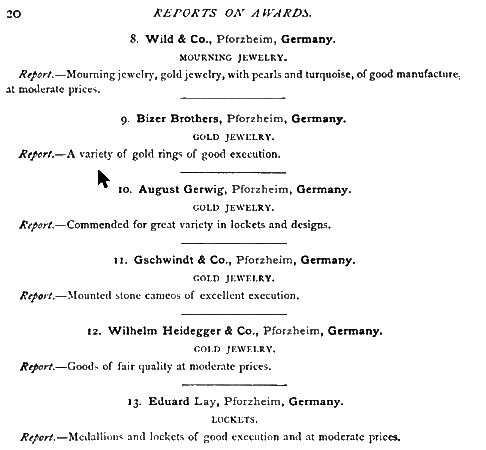
Eduard Lay (1840–1883), Nathan's third son, made lockets and medallions. In 1876 he sent his work across the Atlantic to the Centennial Exhibition in Philadelphia, the first World's Fair held in America, and came home with an award. Documented
Reports on Awards, Centennial Exhibition, Philadelphia 1876: "Eduard Lay, Pforzheim, Germany. Lockets. Medallions and lockets of good execution and at moderate prices."
Firma Carl Lay, Juwelenfabrik. The jewelry factory of Carl Lay (1853–1908), Walter's father, at Durlacher Straße 35. It made fine jewelry in gold and platinum, exported worldwide and was shown at the 1914 Werkbund exhibition. Its full story is told below. Documented
Otto Lay. Otto (1870–1929), Adolf's son, was a gem dealer with his own firm from 1906, later a jewelry wholesaler and exporter at Lameystraße 19, showing gold and silver goods at the Leipzig trade fair in 1921 and 1922. Documented
Gebrüder Lay, Plauen. Richard and Louis Lay, lace manufacturers in Saxony from 1900 with branches in Berlin, Paris and London, were described in 1908 as "both from Pforzheim". How they fit into the family is still being researched. Connection unproven
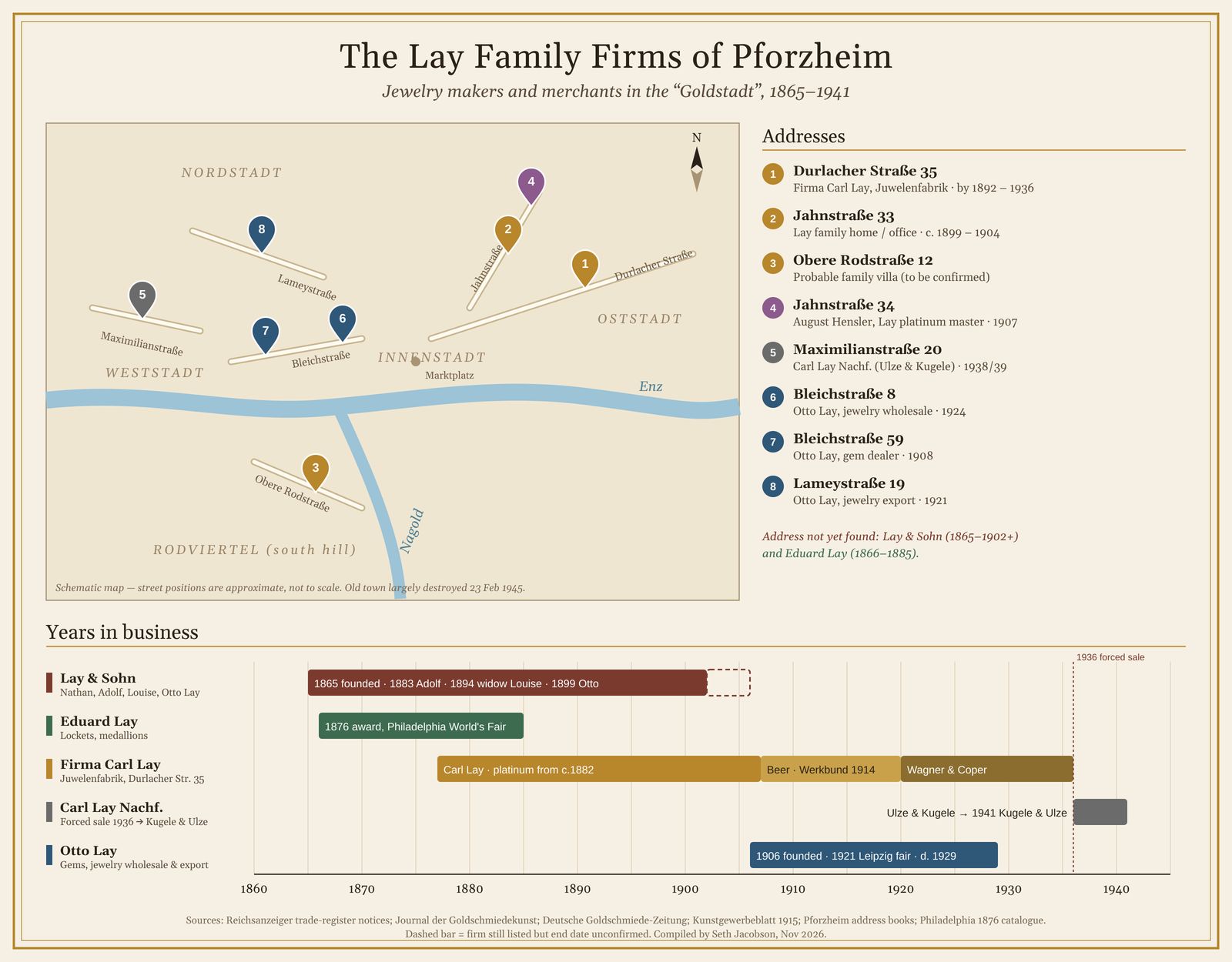
Map and timeline · The family firms, 1865–1941
Where the Lay firms worked
Five family businesses, eight addresses and seventy-five years of trade in the Gold City, from the founding of Lay & Sohn in 1865 to the forced sale of Firma Carl Lay in 1936.
The Lay family firms of Pforzheim. Schematic map; street positions are approximate. Compiled by Seth Jacobson from trade-register notices, trade journals, address books and the Philadelphia 1876 catalogue.
Document · Leo Baeck Institute, Erna Lay Family Collection (AR 11476)
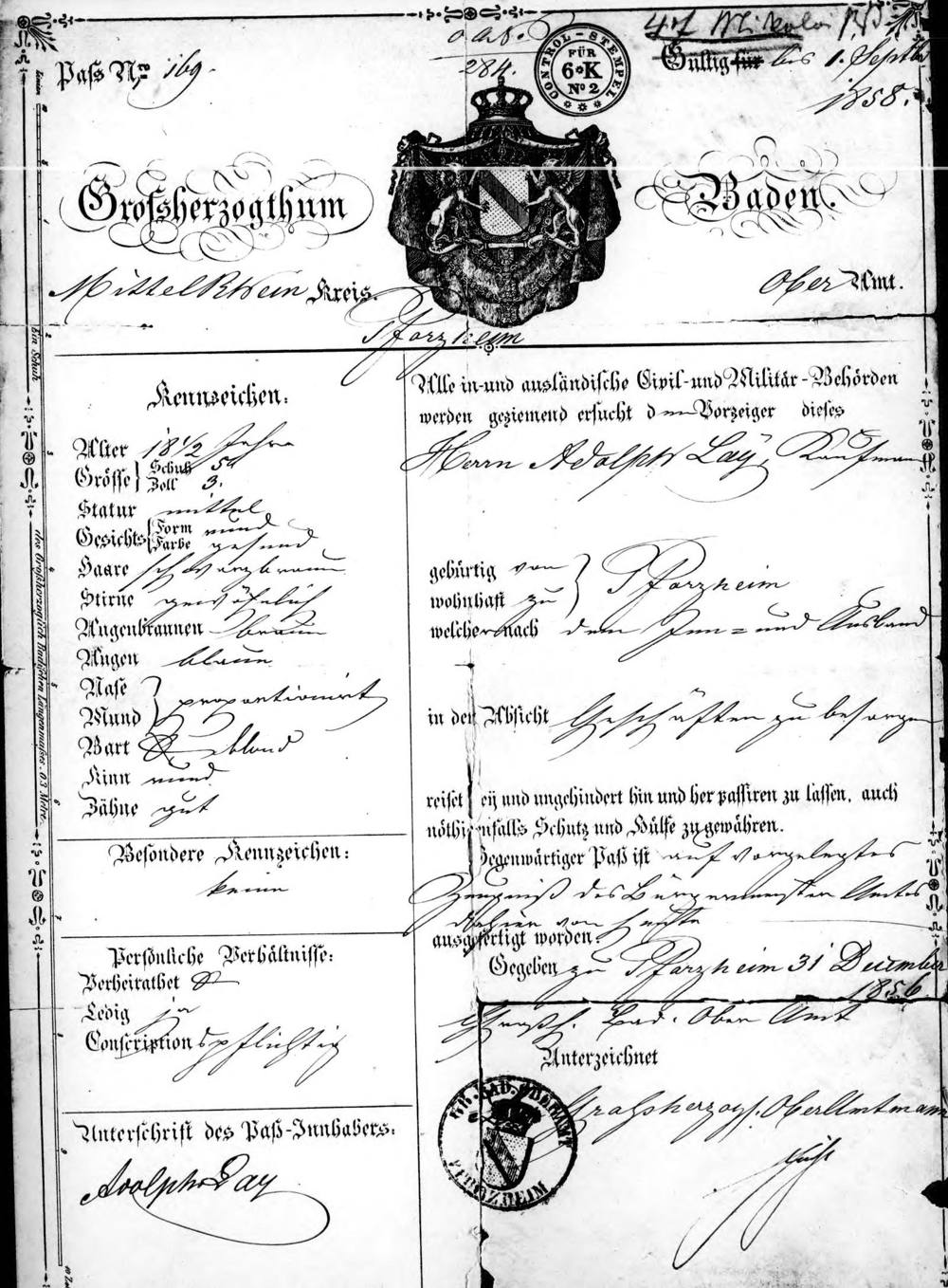
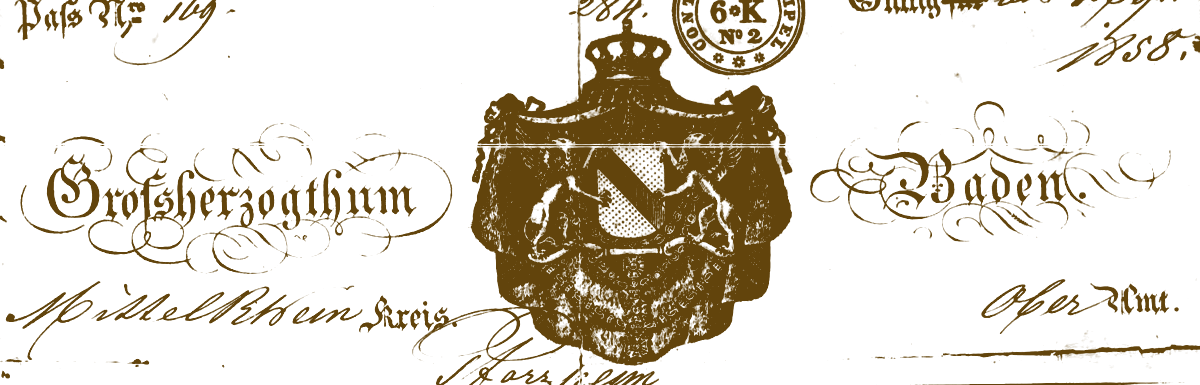
Adolf Lay's passport, No. 169
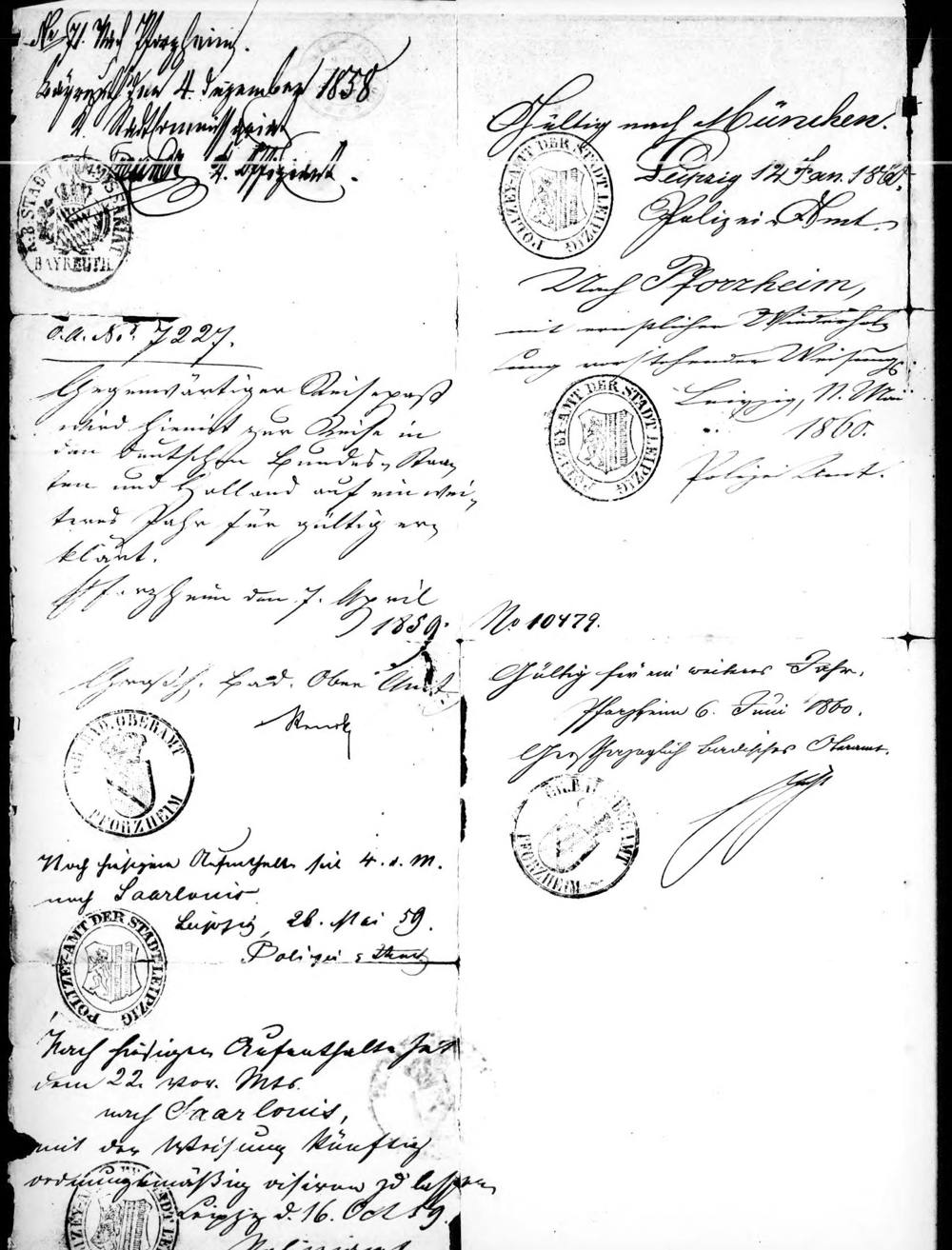
On 31 December 1856 the district office in Pforzheim issued a passport to Adolph Lay, merchant, aged 18½, so he could travel "at home and abroad to conduct business". He signed it himself. The visa stamps on the back trace a young jewelry salesman working the German trade circuit, with repeated stops in Leipzig, the great trade-fair city. The papers went to New York with his grandson Alfred in 1940, and Alfred's widow Erna later gave them to the Leo Baeck Institute.
Front: Grand Duchy of Baden, Mittelrhein district, Pforzheim district office. Description and signature of Adolph Lay.Back: visas from Bayreuth, Pforzheim and the Leipzig police office, 1858–1860.
Date
Place
What the passport says
31 Dec 1856
Pforzheim
Issued to "Herrn Adolph Lay, Kaufmann", born and living in Pforzheim. Age 18½; height 5 feet 3 inches (Baden measure); build medium; face round; hair dark brown; eyes brown; teeth good; no distinguishing marks; single; liable for military service. Valid to 1 September 1858.
4 Dec 1858
Bayreuth, Bavaria
Visa of the Royal Bavarian city magistrate.
7 Apr 1859
Pforzheim
Renewed for one year for travel in the states of the German Confederation and Holland.
28 May 1859
Leipzig
After four days' stay, onward to Saarlouis.
16 Oct 1859
Leipzig
After a stay since the 22nd of the previous month, onward to Saarlouis.
14 Jan 1860
Leipzig
Valid for travel to Munich.
11 May 1860
Leipzig
Home to Pforzheim.
6 Jun 1860
Pforzheim
Valid for one more year.
Adolf married Louise Bodenheim in the Mannheim synagogue on 26 February 1865. Their daughter Eugenie was born in Pforzheim in 1867.
Chapter 3 · My great-grandfather
Carl Lay, jewelry manufacturer
Carl Lay was born in Pforzheim on 21 April 1853, the younger son of the merchant Nathan Lay and Jeanette Odenheimer. His grandfather had arrived from Alsace with a revocable residence permit. Carl grew up as a citizen of a booming industrial town and went into the business that defined it.
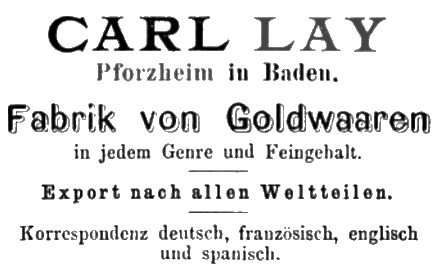
He founded Firma Carl Lay around 1877. By 1885 he was advertising in the Deutsche Kolonialzeitung, a paper read by Germans trading overseas, as a "factory of gold wares in every style and fineness", with "export to all parts of the world" and correspondence handled in German, French, English and Spanish. The factory stood at Durlacher Straße 35 by 1892, on one of Pforzheim's busiest commercial streets. Documented
Carl Lay's advertisement, Deutsche Kolonialzeitung, 1885.
Carl also worked early with platinum, then a rare and difficult metal. His master craftsman August Hensler spent more than 25 years at the firm from about 1882 "always working with this highly prized precious metal", as a trade journal put it when Hensler opened his own platinum refinery in 1907.
Selling to the world
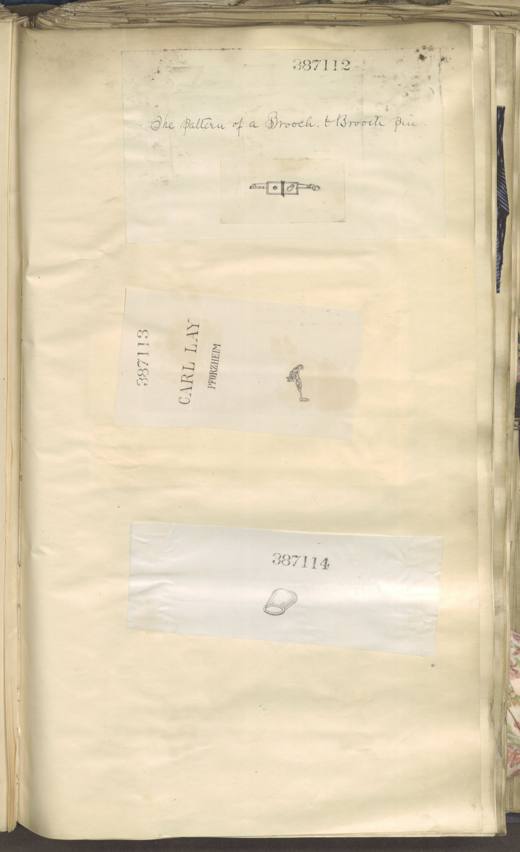
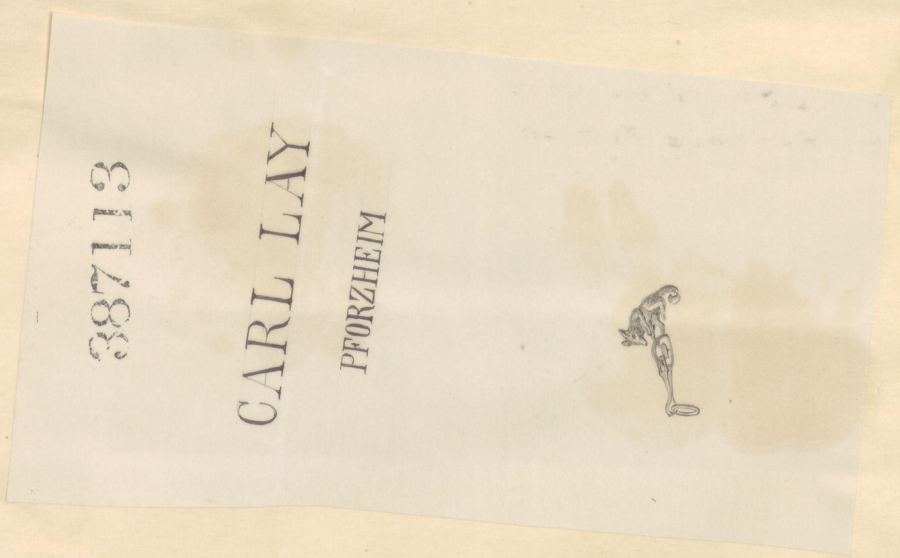
Pforzheim lived on exports, and Carl played that game. In 1901 and 1902 Firma Carl Lay registered four of its jewelry designs with the Patent Office in London, protecting them against copying in the British market. One of the drawings survives and is shown below. Registration cost money and only made sense for a firm that expected to sell abroad in volume. The registrations survive at the National Archives in Kew, filed with samples or drawings of each design.
A small manufacturer in a Baden town, registering his designs in London to sell to the world.
Think of a design registration as the 1900 version of a trademark filing for a product line: a small manufacturer staking a claim in the largest consumer market in Europe.
Two families
Carl's first wife, Hermine Strauß, gave him three daughters: Meta (born 1878), Else (1879) and Alice. Hermine died young in 1892. On 23 November 1893 Carl married Martha Kaufmann of Stuttgart in that city's civil registry, and their only child, Walter Fritz Lay, was born in Pforzheim on 15 February 1897. Documented
Success shows in the Wiesbaden spa guest lists, where we found documented stays from 1885 to 1907 (see the section below). By 1908 Carl had retired to Wiesbaden, to a flat at Bierstadter Straße 7, listed in the city directory as a man of independent means.
He died there on 21 October 1908, aged 55. Because Prussia did not yet permit cremation, he was cremated across the Rhine in Mainz two days later. Relatives came from Pforzheim, Mannheim and Plauen.
The firm after Carl
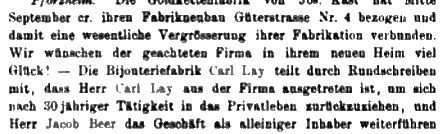
In 1907, after thirty years in business, Carl retired and handed the firm to his son-in-law Jacob Beer, Meta's husband, as sole owner. Documented
Journal der Goldschmiedekunst, 1907: Carl Lay leaves the firm after 30 years; Jacob Beer continues the business as sole owner.
Under Beer the firm reached its artistic high point at the 1914 Werkbund exhibition (see below). In 1910 a young Pforzheim man named Adolf Coper was given signing authority. When Beer fell ill, he handed the factory in April 1920 "with all assets and liabilities" to his long-time employees Adolf Coper and Arthur Wagner, who kept the name. Beer died that June; the firm's death notice was signed by "the owners and staff of the firm Carl Lay". Coper married Beer's daughter Elly in 1925. Documented
Discovery · Cologne 1914 · Kunstgewerbeblatt 1915
The jewelry of Firma Carl Lay
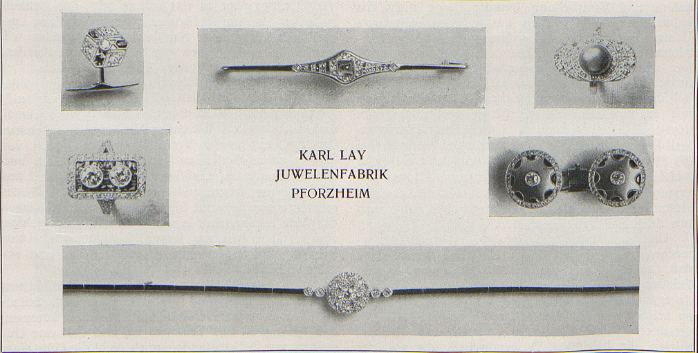
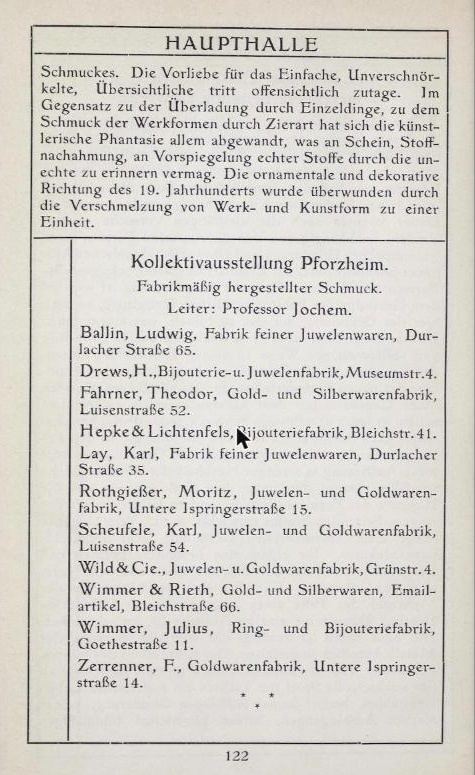
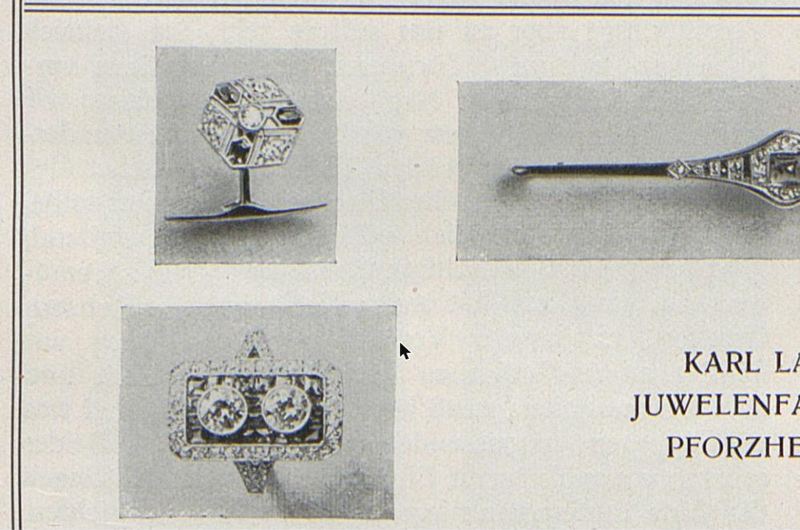
In 1914 the Deutscher Werkbund, the movement that championed simple, honest modern design, held a great exhibition in Cologne. Pforzheim sent a group display of factory-made fine jewelry, and only twelve firms were chosen for it. One was "Lay, Karl, factory of fine jewelry, Durlacher Straße 35."
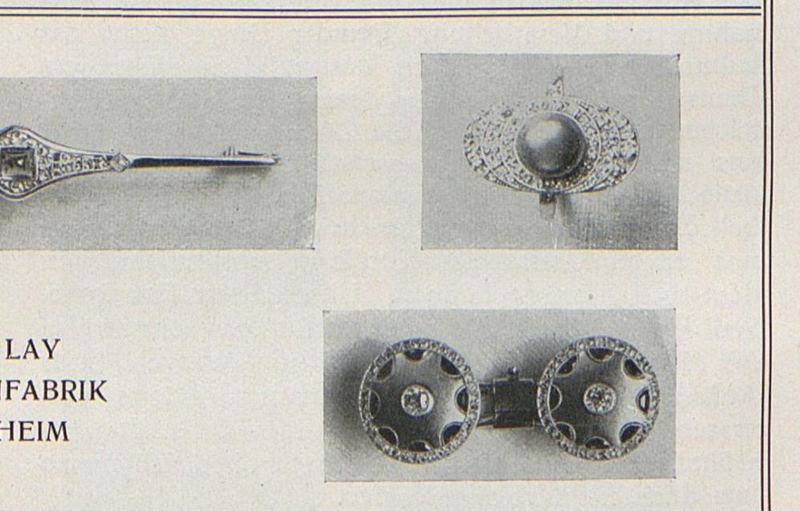
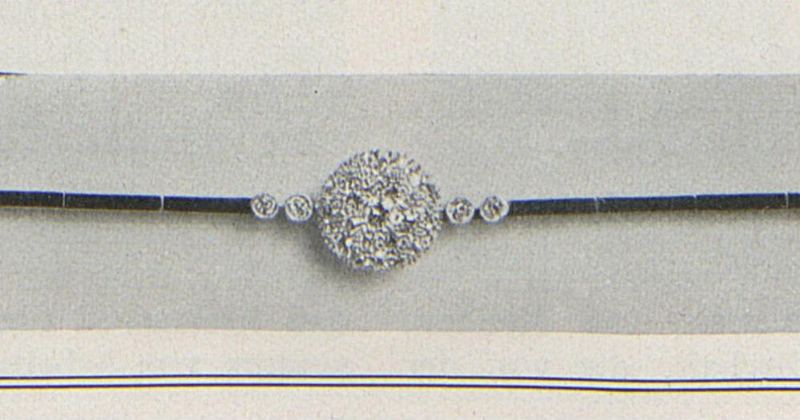
"Karl Lay · Juwelenfabrik · Pforzheim": a stud, a bar brooch, a pearl ring, a ring with two large stones, a pair of buttons and a bracelet. Shown at Cologne 1914; plate from Kunstgewerbeblatt NF 26 (1915), p. 171, Heidelberg University Library.
Official catalogue, Werkbund Exhibition Cologne 1914, p. 122. Heidelberg University Library.
Close-up: the stud and the ring with two large stones in a rectangular frame.Close-up: the pearl ring in an openwork setting, and the domed buttons.Close-up: the bracelet with its round central cluster.
"K. Lay showed the same aims with equal success. Worth noting are the larger brooch, two brooches, a bracelet and the larger rings."
That was the verdict of the trade journal Die Goldschmiedekunst in 1915. The pieces show the platinum-and-diamond style the firm had mastered over thirty years: light openwork settings, clean geometric lines and stones set to catch the light.
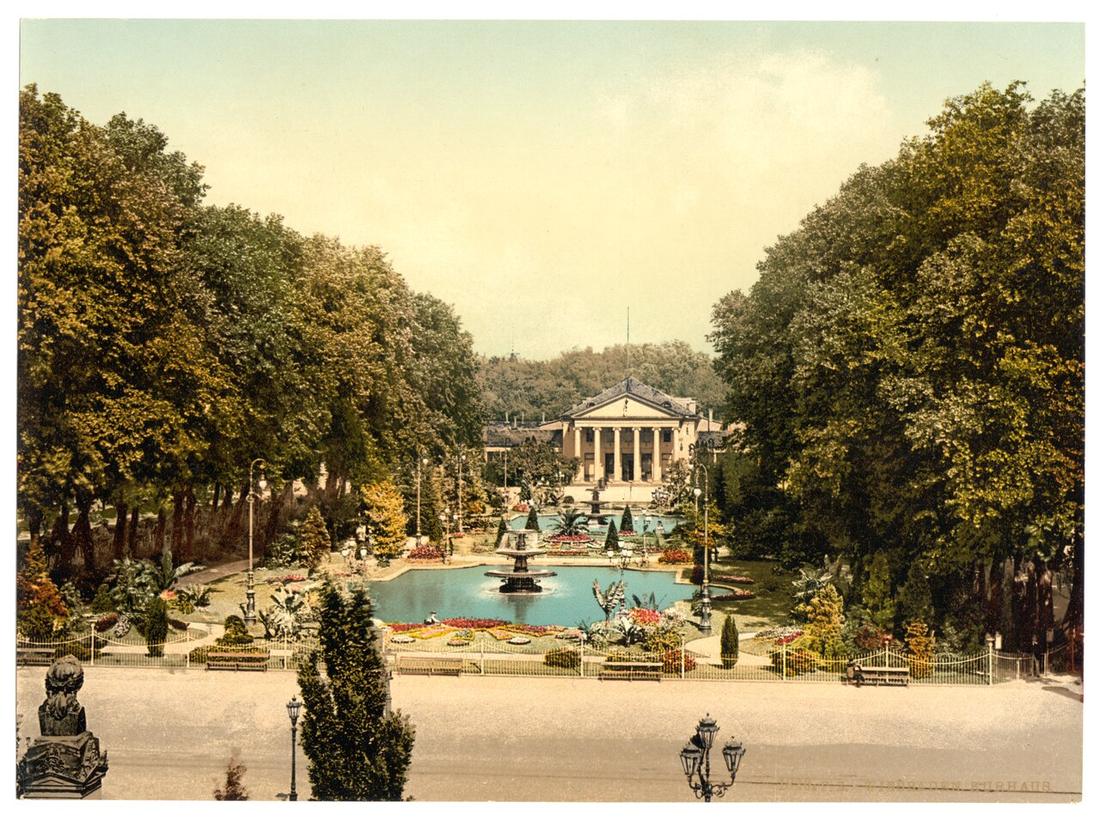
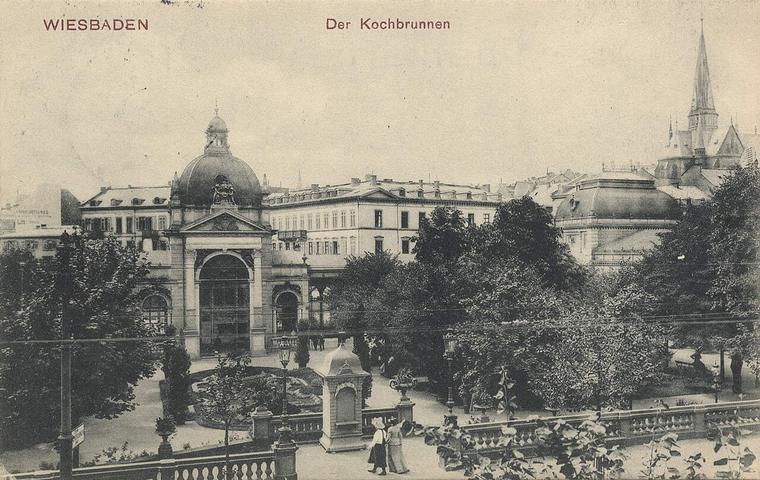
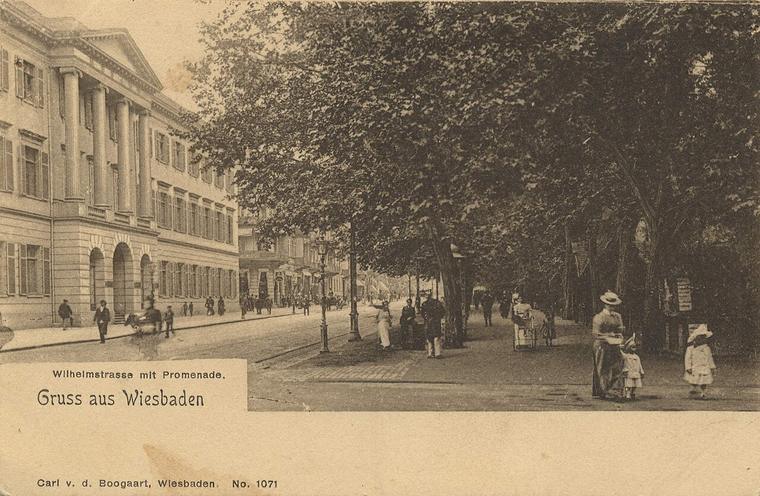
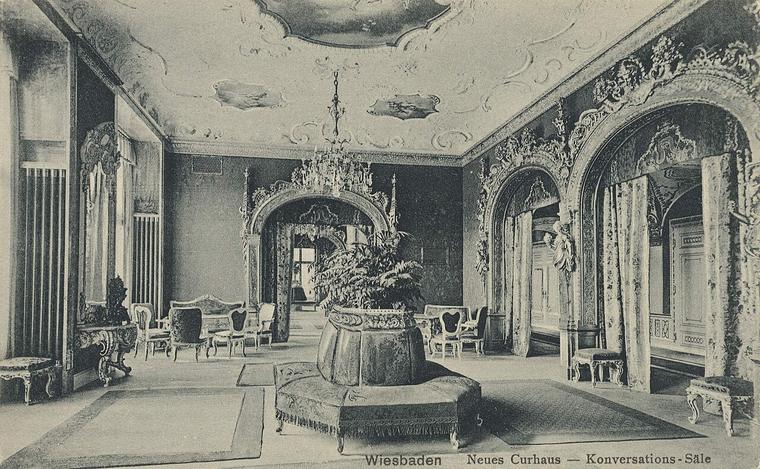
Around 1900 Wiesbaden was one of the most fashionable spa towns in Europe, a place where emperors, industrialists and successful merchants came to drink from the hot springs, stroll the colonnades and be seen at the Kurhaus. Every visitor was printed in the town's spa newspaper, the Bade-Blatt, with name, home town and hotel.
I was surprised to discover exactly where my family stayed. Through detailed research in those printed guest registers, we found Carl Lay of Pforzheim again and again, with the date of each visit, the name of his hotel and even who travelled with him: his wife, and by 1907 a servant.
The Kurhaus and its gardens, the heart of spa life, as Carl knew it on his visits of 1885 and 1900. Photochrom, c. 1890–1900. Library of Congress, via Wikimedia Commons (public domain).
The Kochbrunnen, the hottest and most famous spring, where guests drank the salty water each morning. Postcard, 1907. Zeno.org, via Wikimedia Commons (public domain).Wilhelmstraße and its promenade, Wiesbaden's grand boulevard of hotels and cafés, c. 1900. Zeno.org, via Wikimedia Commons (public domain).The conversation rooms of the new Kurhaus, opened in 1907, the year of Carl's last recorded stays. Zeno.org, via Wikimedia Commons (public domain).
10 Sep 1885
Hotel du Nord
"Lay, Pforzheim," with his wife
14 Apr 1900
Hotel Erbprinz
"Lay, C."
29 May 1907
Sendig-Eden-Hotel
"Lay, manufacturer, with wife"
20 Sep 1907
Hotel Riviera, Bierstadter Str. 5
"Lay, manufacturer, with wife and servant"
8 Oct 1907
Römerbad
"Lay jr."
1908
Bierstadter Str. 7
Carl retires to a flat next door to the Hotel Riviera
The pattern tells its own story: an occasional holiday in the 1880s, then longer and grander stays with a servant by 1907, and finally a move to Wiesbaden for good, next door to the hotel he had stayed in the year before.
Discovery · The National Archives, Kew, BT 50/454
A Carl Lay design, registered in London
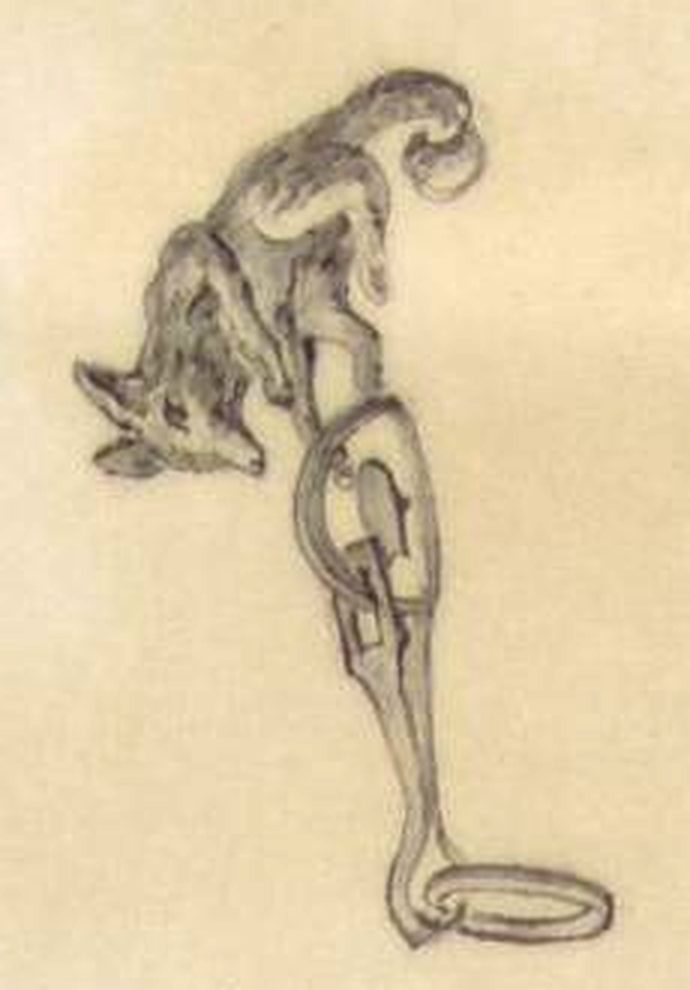
In the Board of Trade's registers of designs, pasted onto a page between two other firms' entries, is a small slip stamped CARL LAY · PFORZHEIM and numbered 387113. It is the drawing Carl's firm filed around the start of 1902 to protect one of its pieces in the British market.
The sketch shows a fox, tail curled, draped over what looks like a hunting whip that ends in a small ring. A fox-hunting motif was a natural choice for a piece meant for British buyers: the kind of charm or pin a country gentleman might wear on a watch chain or a tie.
The register page: Carl Lay's slip is in the middle, between designs 387112 and 387114.The design itself, enlarged: a fox on a hunting whip.Registered design No. 387113, "Carl Lay, Pforzheim". UK National Archives, BT 50/454.
Gold, 14 to 18 caratLow-carat gold, 8 caratDoublé, gold on brassSilverEnamelGarnetPearl
To see what the Gold City produced in its golden age, from Jugendstil brooches to fine gem-set pieces, visit the collection of the Schmuckmuseum Pforzheim, the city's jewelry museum on Jahnstraße, a few doors from where Firma Carl Lay worked around 1900.
Chapter 4 · Flight to Argentina
Adolf Coper keeps the firm alive, then runs for his life
Adolf Coper was born in Pforzheim on 14 September 1885, the son of Moritz Coper and Mathilde Grünwald, a Jewish family of the town. He joined Firma Carl Lay as a young man and spent a quarter of a century building it. By the early 1930s he was co-owner of the factory, a manufacturer (Fabrikant) and a member of the Pforzheim Rotary Club from 1931 to 1933, a sign of how established he had become. Documented
Then the ground gave way. After 1933, Jewish businessmen in Germany were pushed out of clubs, cut off from customers and squeezed by boycotts and special taxes. In 1936 Adolf Coper left Pforzheim, travelled through Holland and sailed for Buenos Aires, where he became Adolfo Coper. His wife Elly went with him. Documented
He spent twenty-five years building the firm. In 1936 he left with what he could carry.
He did not leave the trade behind. In Buenos Aires he is recorded as a shareholder in Walser, Wald y Cía., a jewelry and watch house. Being verified He died in Buenos Aires in May 1963 and was buried there.
His sister Selma Coper fled to the Netherlands in 1939, was caught after the German occupation and survived Westerbork and Theresienstadt. Stolpersteine for Adolf and Selma, small brass memorial stones, are set into the pavement in front of Durlacher Straße 35.
Chapter 5 · My grandfather
Walter Fritz Lay: from Pforzheim to New York
Walter spent his early childhood in Pforzheim. At eleven he was living with his parents in Wiesbaden when his father died, and he stayed there with his mother until he was about fifteen, when they moved to Frankfurt.
In the First World War he served as a private in the 4th Company of Infantry Regiment 87, the 1st Nassau Regiment, based in Mainz. In spring 1917 the Prussian casualty lists reported "Lay, Walter, 15.2.97 Pforzheim" first as missing and then as a prisoner. Red Cross cards show his mother's enquiry from Frankfurt on 28 April 1917 and the reply from Paris on 17 May: he had been captured by the French, almost certainly in the fighting on the Chemin des Dames that April. Documented
When he came home, the family business he might have expected to inherit was in other hands. In 1920 Firma Carl Lay passed to his half-sisters' circle, Adolf Coper and Artur Wagner.
On 19 November 1921, aged 24, Walter boarded the Princess Matoika at Bremen, travelling second class. He gave his trade as Maschinist, machinist, and his last residence as Pforzheim. He reached New York on 2 December 1921, and on 14 December filed his declaration of intention at the New York County court. Documented
He moved to the United States as a German citizen and stayed one for another seventeen years.
Walter married Pauline Shapiro in the Bronx in 1924. Their daughter Shirley, my mother, was born in Manhattan in October 1928.
Timeline
Key dates
1784Nathan Levy and Hoffele live in Bouxwiller, Alsace, with their son Leyser.
1809Baden protection letter admits Löser Levi from Buchsweiler to Pforzheim; the family takes the name Lay.
1838Adolf Lay born in Pforzheim to Nathan Lay and Jeanette Odenheimer.
1865Lay & Sohn founded by Nathan and Adolf Lay.
1876Eduard Lay wins an award for his lockets at the Philadelphia World's Fair.
1853Carl Lay born in Pforzheim.
1856Adolf's Baden passport No. 169 issued; trade journeys to Leipzig, Bayreuth, Saarlouis and Munich follow.
1859Löser Lay dies in Pforzheim, aged 88.
1865Adolf marries Louise Bodenheim in Mannheim.
1892New Pforzheim synagogue dedicated; Carl's first wife Hermine dies.
1893Carl marries Martha Kaufmann in Stuttgart.
1897Walter Fritz Lay born in Pforzheim, 15 February.
1907Carl retires after 30 years; his son-in-law Jacob Beer takes over the firm.
1908Carl dies in Wiesbaden and is cremated in Mainz.
1913Martha and Walter living at Beethovenstraße 16, Frankfurt.
1914Firma Carl Lay shows its jewelry at the Werkbund exhibition in Cologne.
1917Walter captured by the French on the Western Front.
1920Jacob Beer, ill, hands Firma Carl Lay to Adolf Coper and Arthur Wagner.
1921Walter sails from Bremen on the Princess Matoika, arriving in New York on 2 December.
Family tree · The Pforzheim generations
From Löser Levi to Walter Lay
The gold-edged line runs to the author. Dates come from civil and Jewish registers, gravestones and archive files.
Nathan Levy + HoffeleBouxwiller, 1784 (probable)
Löser Levi, later Layc.1771–1859 · to Pforzheim 1809
Seth Jacobson is an entrepreneur and real estate investor. He founded Thai Kitchen, the Asian food brand later acquired by McCormick & Company, co-founded Snapdragon Foods, and leads the real estate firm Arvus Equity. He is the great-grandson of the Pforzheim jewelry manufacturer Carl Lay.
This site grew out of his research into his mother's family: a German-Jewish business family in the jewelry trade of Pforzheim, from their arrival from Alsace in 1809 to his grandfather's journey to New York in 1921. It draws on archives in Germany, France, Britain, Argentina and the United States, and touches on the history of the Pforzheim jewelry industry, Jewish entrepreneurs in Imperial Germany, spa culture in Wiesbaden and emigration to the Americas.
Corrections, family memories and photographs are always welcome.
 Grand Duchy of Baden · passport No. 169 · Pforzheim, 1856